
BLDC Controller Product PageWhatsApp: +86 18268661068
BLDC Motor Controller Manufacturer

BLDC Motor Controller For 12V, 24V, 48V, 72V And 110V Brushless DC Motors.

Shenghe Motor manufactures three-phase brushless motor controllers covering DC 18V to 220V input — sufficient to drive every voltage class of BLDC motor from 12V mobile platforms up to 110V industrial spindles. Every BLDC motor driver is developed in-house, with Hall-sensor and sensorless control variants, FOC / SVPWM firmware and PID closed-loop speed regulation. Whether you need a standalone three-phase BLDC motor controller for a custom build or a matched BLDC motor + controller kit tested at the factory, Shenghe ships from Cixi with engineering support in English for OEM and integration projects.

ISO 9001 Certified Manufacturing In-House PCB Production Controllers built on-site Ships from Cixi, Ningbo — 2–3 week lead time CE / RoHS Compliant
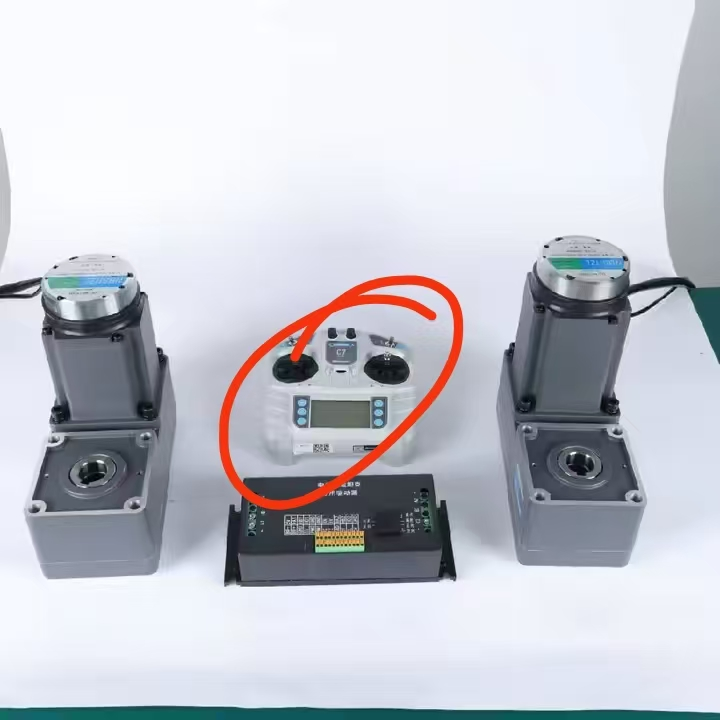
Shenghe BLDC motor controller — three-phase brushless DC motor driver for 12V to 110V motors
Why Shenghe BLDC Controllers

Engineered For Real Machine Loads, Not Datasheet Numbers.

A BLDC motor controller is the brain of every brushless DC drive system. It handles electronic commutation, speed regulation, torque limiting and fault protection. Shenghe's BLDC motor driver lineup covers low-voltage mobile platforms (12V–48V e-mobility, robotics) up to high-voltage industrial spindles (72V–220V). FOC, SVPWM and PID closed-loop algorithms are built into the firmware, and every controller is validated against Shenghe's own motor families before shipment.

  • FOC and SVPWM control for smooth, efficient operation across the whole load range
  • PID closed-loop with strong low-speed torque output for AGV traction and conveyor drives
  • Overvoltage, undervoltage, overcurrent, short-circuit and stall protection
  • RS232 / RS485 communication for PLC integration and multi-axis coordination
  • Available as standalone controller or pre-tested motor + controller kit
How It Works

How A BLDC Motor Controller Works

A BLDC motor controller converts a DC bus voltage into a three-phase variable-frequency output that drives a brushless DC motor. The signal path is the same whether the bus is 12V or 110V — only the MOSFET voltage rating and capacitor sizing change.

  1. DC bus filtering: Bulk electrolytic capacitors stabilize the DC input and absorb regenerative current returned by the motor during deceleration. Larger bus voltages need higher-rated capacitors.
  2. Three-phase MOSFET inverter: Three half-bridges (six high-current MOSFETs) sequentially energize the motor's stator phases U, V and W. Different bus voltages call for matching MOSFET ratings — 60V parts for 24V/36V systems, 100–150V for 48V, 200V+ for 72V/110V.
  3. Hall-sensor commutation: Three Hall sensors inside the motor read rotor position and feed the MCU, which decides which phase pair to energize next. Trapezoidal output is simpler; sinusoidal (FOC) output is smoother and quieter.
  4. Closed-loop PID speed control: Hall pulses also provide rotor speed. The PID controller compares actual speed against the setpoint (analog, PWM, RS485 or pulse-frequency input) and adjusts duty cycle every cycle. Sensorless variants derive position from back-EMF instead.
  5. Protection layer: Overcurrent, overvoltage, undervoltage, stall and short-circuit detection trigger gate shutoff within microseconds, protecting both the controller and the motor windings.
BLDC motor controller circuit diagram — DC bus, three-phase MOSFET inverter, Hall-sensor closed-loop feedback to MCU
Brushless DC motor controller circuit topology — three-phase inverter with Hall-sensor closed-loop feedback. Full schematic and gate-driver wiring are available in the controller selection guide.
Controller Lineup

BLDC Motor Controller Specifications

Three controller families cover the full 12V to 110V BLDC motor range. All are three-phase, all support Hall sensor and sensorless variants, and all can be supplied as a tested motor + controller kit.

ModelInput VoltageRated CurrentSpeed RangeBest For
BLD22010DC 18–60V≤ 10A0–20,000 RPM12V / 24V / 36V / 48V mobile and battery-powered systems
BLDB6010AC/DC 24–80V8A continuous0–20,000 RPM24V–72V automation with FOC, SVPWM and 3-mode position/speed/torque control
BLD6010DC 80–220V≤ 10A0–20,000 RPM48V / 72V / 110V industrial drives, AGV traction and high-power conveyors

For 48V projects specifically, see the dedicated 48V BLDC motor controller page covering the BLD6010 with 750W–2000W motor pairings.

Application Fields

Where BLDC Motor Controllers Are Used

01
AGV and Mobile Robots

Precise speed and torque control keeps AGV navigation smooth. Pre-tuned motor + controller kits allow quick deployment for wheel-drive and steering actuators.

02
Conveyor and Sorting Systems

Constant-speed or variable-speed conveyor lines rely on stable low-speed torque, accel/decel profiles and overcurrent protection during product jams.

03
e-Mobility (e-Rickshaw, e-Scooter, e-Bike)

48V and 60V BLDC controllers are the standard for Indian and Southeast Asian electric three-wheelers and e-scooters. Hall closed-loop holds speed on inclines and provides regenerative braking on demand.

04
Industrial Automation Equipment

Packaging, winding and labeling machines benefit from BLDB6010's position/speed/torque 3-mode BLDC motor control, enabling multi-axis coordination over RS485.

05
Robotics and Custom OEM

Joint actuators and end-effectors in robotic arms demand compact BLDC motor with integrated controller designs. Firmware can be customized for torque limiting and CAN bus protocols.

Quick RFQ

Need A BLDC Motor Controller For Your System?

Send motor voltage, target application and required interface. An engineer will recommend a controller (or full motor + controller kit) and quote within one working day.

WhatsApp Sales
Motor + Controller Kit

BLDC Motor With Controller — Pre-Tested Kits

Buying a brushless DC motor and controller separately is a common source of integration headaches: parameter mismatch, polarity reversals, Hall sequence errors and PID instability waste days on the bench. A matched BLDC motor with controller kit from Shenghe ships pre-wired, with the firmware tuned to the specific motor's pole count, winding resistance and load profile.

  • Parameters pre-tuned: Pole count, Hall phase sequence, current limits and PID gains all set at the factory.
  • Single-vendor support: One contact for both motor and controller — no finger-pointing between suppliers.
  • Standard kits available: 12V × 100W, 24V × 200W, 24V × 400W, 48V × 500W, 48V × 1000W, 48V × 2000W, 72V × 1500W, 110V × 3000W and more.
  • Custom kit: Specify motor frame, gearbox ratio, controller protocol and we build to spec — typical lead time 2–3 weeks.
  • Quality test: Each kit runs on a load bench at 25%, 50%, 100% and overcurrent thresholds before shipment.
Three-Phase BLDC Motor Controller

Three-Phase BLDC Motor Controller — Why It Matters

Nearly all industrial brushless DC motors are three-phase. A three-phase BLDC motor controller drives the three stator windings (phases U, V, W) through a six-MOSFET inverter, energizing two phases at a time in a six-step commutation cycle. Three-phase architecture provides:

  • Smoother torque output: Six commutation steps per electrical revolution vs two for single-phase, reducing torque ripple by ~70%.
  • Higher efficiency: Better winding utilization, typically 88–93% peak efficiency vs 75–82% for single-phase.
  • Higher startup torque: Critical for AGV traction, conveyor breakaway and pump priming.
  • Better fault tolerance: Some controllers can detect a failed Hall sensor or open phase and continue running on reduced power until shutdown.

All Shenghe BLDC controllers (BLD22010, BLDB6010, BLD6010) are three-phase three-MOSFET-pair designs. None of them drive single-phase brushless motors — for those, a different controller class is required.

Download The BLDC Motor Controller Selection Guide Covers 12V to 110V controller models, motor compatibility table, wiring diagrams and FOC vs trapezoidal selection — PDF format.
Download PDF
Quick Answers

BLDC Motor Controller FAQ For Engineers And Buyers.

Practical answers for engineers evaluating brushless DC motor controller suppliers, comparing sensorless vs Hall-sensor solutions, or sourcing motor + controller kits for OEM projects.

How does a BLDC motor controller work?

A BLDC motor controller converts a DC bus into three-phase variable-frequency output. A six-MOSFET inverter energizes the motor's stator phases in sequence, with timing decided by Hall-sensor or back-EMF rotor position feedback. A PID closed-loop adjusts duty cycle to hold the speed setpoint under varying load.

How to control a BLDC motor?

Send a speed or torque command to the controller via 0–5V analog, 0–100% PWM, RS485 or pulse-frequency input. The controller produces three-phase output with the correct commutation timing automatically. For multi-axis coordination, RS485 with Modbus protocol is the common industrial choice.

Can I buy BLDC motor and controller as a set?

Yes. Shenghe supplies matched motor + controller kits where the driver firmware is pre-tuned to the motor's pole count, winding resistance and target load profile. A matched set eliminates parameter mismatch, reduces commissioning time and gives one point of contact for both halves of the drive system.

Do you support sensorless BLDC motor control?

Yes. Sensorless variants detect rotor position from back-EMF instead of Hall sensors, reducing wiring complexity and improving reliability in harsh environments. Sensorless suits fan, pump and air-purifier applications where startup torque demands are moderate.

What is a three-phase BLDC motor controller?

A three-phase BLDC motor controller drives three stator windings through a six-MOSFET inverter — the standard architecture for industrial brushless DC motors. Three-phase produces smoother torque, higher efficiency and stronger startup torque than single-phase designs.

Can I use a Shenghe controller with Arduino?

For prototyping, yes. The controller accepts 0–5V analog or 0–100% PWM that an Arduino can output via DAC or analogWrite(). For production, RS485 communication offers better noise immunity and supports multi-axis coordination from a PLC or microcontroller.

Request Quote

Tell Us Your Controller Requirements.

Include the motor voltage, load type, speed range, communication protocol and expected quantity so we can recommend the right BLDC motor controller — or a tested motor + controller kit — for your project. Quotation returned within one working day.

WhatsApp
BLDC Motor Controller — quote in 24 hours Get Quote Selection Guide